
A Garden Designer's Guide to Outdoor Kitchen Appliances


The right choice of appliances can make an outdoor kitchen both beautiful and functional, and fully integrated as part of the designed garden and landscape.
It’s not just about al fresco cooking and dining—which is always nice when the weather permits—it’s about creating a social hub where food, conversation and fresh air come together.
Over the years, we’ve worked on projects that feature everything from modern BBQ units to artisan wood-fired pizza ovens. Each time, the key to success has been the same: choose appliances that suit you. We’re talking about your space, your cooking style and your climate, without conforming to trends.
Need help deciding? Here’s our guide to getting it right.
Start With How You’ll Use Your Outdoor Kitchen
Before you fall in love with a gleaming grill or an elegant pizza oven, think about your cooking habits and how you intend to use your outdoor kitchen.
For some clients, the priority is a simple but robust gas BBQ, while others want a larger grill with prep space, refrigeration and storage so they can host gatherings without running back into the house. On the other hand, keen cooks may need to look into specialist appliances for that extra range of options.
Because of this, we like to ask our clients to imagine a typical summer evening in their garden—who’s there, what’s on the menu and whether they’re cooking while chatting with guests or preparing everything in advance. Your answers to these questions should guide your choices, not any glossy brochure!


Create Flow and Function
From our perspective, the appliances are only part of the story. How they’re arranged, the materials they sit within and the way they interact with the wider space all determine whether your outdoor kitchen feels like a natural extension of your garden and your home.
Matching finishes is one way to create cohesion. Stainless steel often pairs beautifully with stone, brick or timber. If you want a more discreet look, your outdoor kitchen appliances can be integrated into cabinetry so they blend into the background when not in use. We can design bespoke built-in units to house your kitchen run, or provide one through our trade partners with a Cabinex Unit. This option comes complete with a sink and tap, an integrated Beefeater barbecue, an outdoor fridge and ample storage cupboards and drawers.
The flow of the space is just as important. The journey from the fridge to the prep area to the cooking area to the dining table should be intuitive. In this family garden in Bramhall, we integrated an outdoor grill, camouflaged against a black wooden fence and framed by tall bushes and trees. Can you find it?

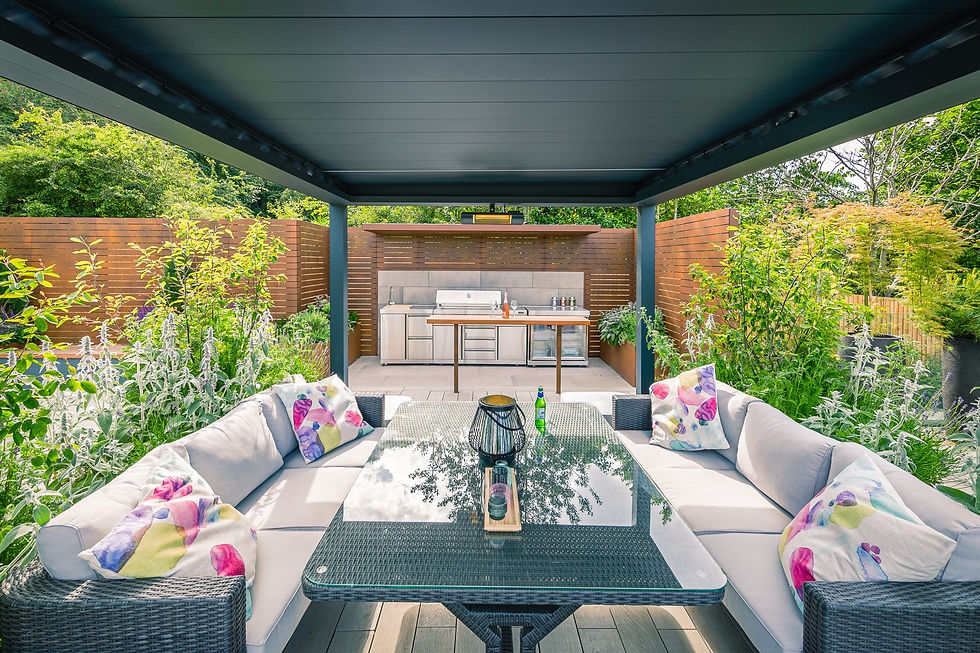
Or, in this contemporary Monton garden, where there’s a sleek, modern pergola which houses a lounge area, a dining table with chairs and an outdoor cooking unit tucked neatly to the side. The intentional placement of the cooking unit means it’s close to the dining space for convenience, but offset to one side so the smoke and heat don’t interfere with seating.

Pay Attention to Climate and Durability
Obviously, outdoor kitchens are exposed to the elements all year round, so your appliances need to withstand whatever the weather throws at them.
Stainless steel is still the most durable option, but the tricky part is not all stainless steel is created equal. For long-term resilience, especially in damp or coastal locations, 304-grade stainless steel is the standard, while marine-grade 316 offers even greater protection for the most exposed sites.
For extra longevity, positioning your outdoor kitchen appliances under a shelter like a pergola or canopy can make a huge difference. If you don’t plan on using the equipment in winter, consider investing in well-fitted covers or seasonal storage—it’s a small step that pays off big time in the long run.
Yes, we’ve seen outdoor ovens that still look showroom-fresh after years simply because the client invested in quality materials and sensible shelter from the start.
Choose the Right Cooking Appliances
The heart of most outdoor kitchens is the grill, and the type you choose should reflect the way you like to cook.
If quick weeknight dinners are your thing, a gas grill is perfect for everything from chicken skewers to grilled vegetables. If you’re chasing that deep, smoky flavour, charcoal is the classic choice. Whereas hybrid grills let you switch between the two depending on the occasion, or pellet grills which bring a gentle, wood-fired aroma.
Undeniably, pizza ovens have a charm about them and often become the centre of activity. A wood-fired oven gives you both rustic flavour and a touch of theatre, ideal for handmade pizzas, roasted vegetables, or baked fish straight from the flames. In contrast, gas-fired models heat up more quickly.
In this large-scale Alderley Edge garden we designed, guests gather to watch dough bubble and crisp, but the oven can also be used for baking and roasting vegetables. Many clients are pleasantly surprised by how versatile a pizza oven becomes once they start experimenting.

Add Comfort and Lifestyle Features
A well-planned outdoor kitchen should feel as inviting as any indoor dining room, and that means thinking beyond the cooking area.
A generously sized dining table with comfortable, weather-resistant chairs entices guests to linger long after the plates are cleared. You can even pair this with outdoor heaters or a fire pit to keep the space cosy well into cooler evenings or the shoulder seasons. Then, you can add thoughtful lighting—overhead for the table, softer ambient glows around the garden—to set the mood and make sure the area remains usable after the sun goes down.
Finally, little touches of greenery can soften the look of an outdoor kitchen and make it feel more connected to the garden… which brings us to the final consideration.
Make Your Outdoor Kitchen More
More than just a cooking space. Make it the heart of your garden gatherings for years to come. Because a great outdoor kitchen isn’t one that has every possible gadget, but one with the right appliances in the right places.
The best projects we’ve worked on have started with open conversations about lifestyle, space and priorities, and then tailored the appliances to match. If you’re ready to have the talk, get in touch. We’re all ears.


